Our Team

Build is infrastructure. Our team is built for it.

EngFlow operates build and test as production infrastructure: execution, telemetry, forensics, reliability, and cost control. That requires depth across build systems, distributed systems, and production operations, because “faster builds” is not the hard part. Operating build and test at sustained scale is.

Leadership and founding engineers

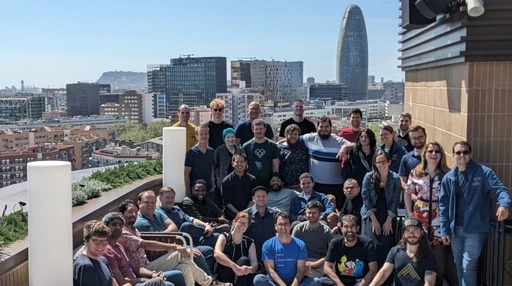
EngFlow’s team includes sixteen people who helped create Bazel at Google and continue to contribute to it.

Helen Altshuler

CEO, Co-Founder

Helen Altshuler helped bring Bazel into the enterprise. At Google, she led enterprise customer onboarding to Bazel and co-created BazelCon. Today, she helps engineering leaders think beyond faster builds to the larger operational challenge of Build Management at AI Scale.

Ulf Adams

Co-CTO, Co-Founder

Ulf Adams led the development and open-sourcing of Bazel and spent 11 years in charge of Bazel and Blaze, Google’s internal equivalent, as both an individual contributor and a manager. He continues to contribute to Bazel.

Luis Fernando Pino Duque

Co-CTO

Luis developed Bazel at Google, with a focus on external APIs and macOS support. He brings deep expertise in the parts of Bazel that matter most to teams building real-world developer platforms.

Robert Khedouri

Chief Strategy & Operating Officer

Rob is an experienced strategy and operations executive, founded two startups with exits, former division GM of SanDisk, former management consultant at McKinsey & Co., and corporate/M&A attorney at Cravath, Swaine & Moore. He holds a BSE from Wharton and a JD from U. Penn Law School.

László Csomor

Founding Engineer

László Csomor played an integral role in the development and open-sourcing of Bazel and led the Bazel-on-Windows team during his nine years at Google. He is a key voice on cross-platform build systems and Bazel in large enterprise environments.

Jay Conrod

Software Engineer

Jay Conrod led the development of rules_go and Gazelle, two of the most important projects in the Bazel ecosystem for Go developers. His background spans compilers, language systems, and storage systems development at Google, Qualcomm, and Nvidia.

Benjamin Peterson

Software Engineer

Benjamin Peterson worked on developer tools at Dropbox, where he helped migrate the company to Bazel and wrote Bazel rules for Go and Python. He also contributes to several open-source projects, including Bazel, CPython, and six.

Mike Bland

Developer Experience Platform Architect

Mike Bland brings deep experience in build systems, testing culture, and developer productivity. At Google, he led the Testing Group and helped drive the initial internal adoption of Blaze and remote execution. He later led Apple’s Quality Culture Initiative.

Corbin McNeely -Smith

Software Engineer

Corbin McNeely-Smith has spent 13 years in developer tooling and infrastructure at Google and Block. He co-maintains and is code owner of rules_kotlin and has also contributed to Bazel Android.

Yannic Bonenberger

Software Engineer

Yannic Bonenberger has contributed to Bazel since 2017 and initiated and co-maintains bazelbuild/rules_proto. His work sits at the intersection of Bazel extensibility, modern build systems, and the day-to-day realities of running builds at scale.

Han-Wen Nienhuys

Software Engineer

Han-Wen Nienhuys worked on developer tools at Google and originally proposed open-sourcing the Bazel Build System. He is also the author of LilyPond, Zoekt, go-fuse, and many other open-source projects.

Sara Adams

Data Protection Officer, Founding Engineer

Sara Adams brings deep expertise in privacy, security, and the infrastructure behind large-scale software systems. Before joining EngFlow, she spent 11 years in Google’s privacy and security engineering organization, developing the account management infrastructure used by billions of users. At EngFlow, she adds an important perspective on the operational, security, and governance requirements of modern build systems.

What makes this team different

Deep roots in the build ecosystem
We come from the world where build is a platform: Bazel, remote execution, caching, hermeticity, reproducibility, and large-scale monorepo realities.
Production-grade distributed systems mindset
Running build at AI scale is running a multi-tenant distributed system. We build for reliability, capacity discipline, safe rollouts, and failure visibility.
Obsessed with explainability
Build failures are expensive because they are hard to explain quickly. We invest in telemetry and forensics so teams can answer “why” without archaeology.
Built for enterprise reality
Mixed toolchains, migration phases, large artifacts, and legacy workflows are the norm. We design for heterogeneity, not purity.
We are not “build acceleration” experts. We are build infrastructure operators.

How we work

A few operating principles that shape the product and the company.
Evidence over folklore
We treat build as an observable system. We prefer telemetry and analysis to guesswork and war stories.
Operational outcomes are product outcomes
Reliability, safe change, and cost governance are not “services.” They are requirements the platform must deliver.
Governance and policy can’t come at the expense of flow. If the platform is hard to use, it won’t be trusted.
Make the hard things routine
Upgrades, onboarding, and scaling should be boring. If it requires heroics, the system is unfinished.

The team you’ll work with

Customer-led, category-driven

We build in partnership with customers operating at the edge of build scale—where outages are unacceptable and change velocity is relentless. Our goal is to define the Build Management at AI Scale category by shipping the capabilities that make build production-grade.

If build is becoming shared, business-critical infrastructure in your organization, talk to the people who live this problem.